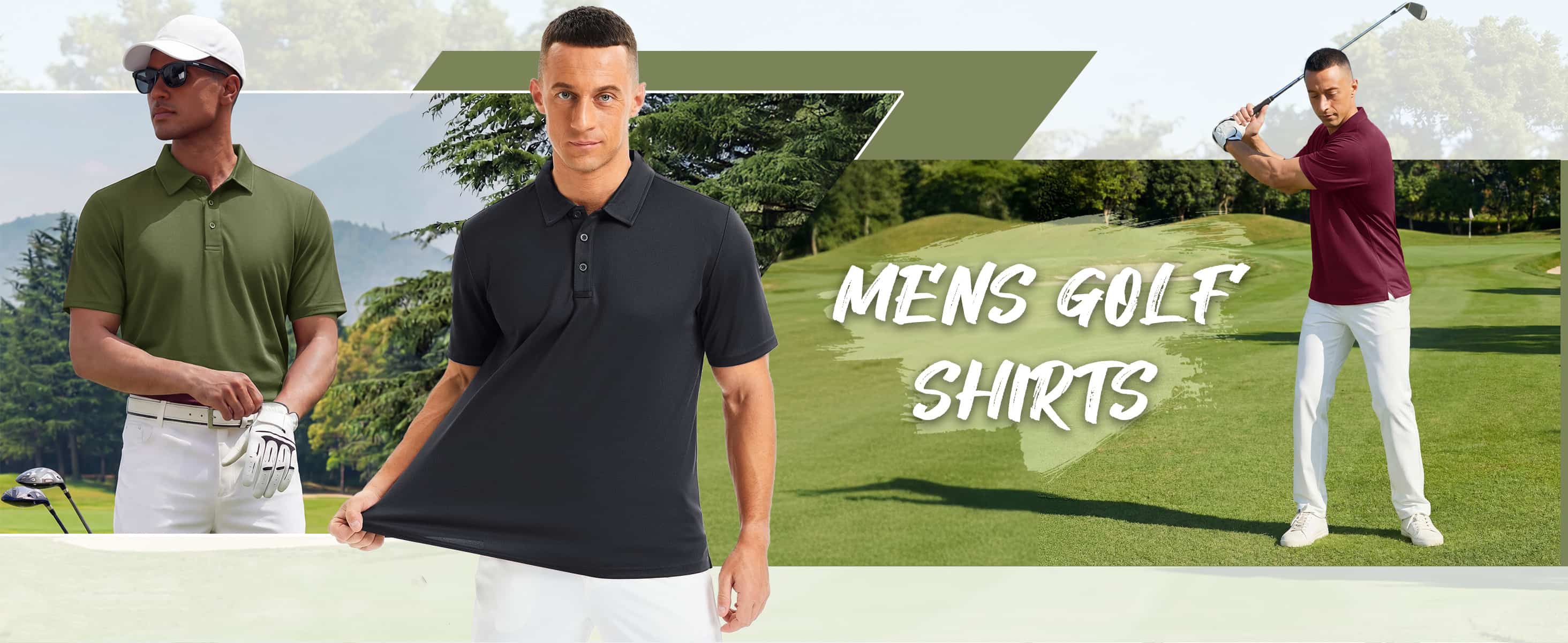
A polo shirt may look simple, but its performance depends on much more than its collar and short-sleeve silhouette. During a golf game, a summer commute, a business trip, or an outdoor team event, wearers need airflow, freedom of movement, moisture management, and a polished appearance after repeated washing.
For apparel buyers and product development teams, the key question is not whether a shirt is described as moisture-wicking or quick-drying. The more important question is whether its fabric, construction, and styling match the intended market.
What Is a Performance Polo Shirt?
A performance polo shirt is a collared knit top developed with functional fabric and construction features that improve comfort during movement and warm-weather use. These features may include moisture wicking, quick drying, breathability, stretch, shape retention, and easy-care performance.
Unlike a conventional cotton polo, a performance knit is designed to move moisture away from the skin and spread it across the outer surface of the fabric. This can support faster evaporation and reduce the damp feeling associated with perspiration. The result depends on fiber composition, yarn structure, fabric weight, knit construction, and finishing treatment.
Terms such as “moisture-wicking” and “quick-drying” are widely used in the apparel market, but they are not universal performance ratings. Buyers should request test data that explains how moisture management, drying time, stretch recovery, and air permeability were evaluated.
How Fabric and Construction Create Wearer Value
Moisture Wicking and Quick Drying
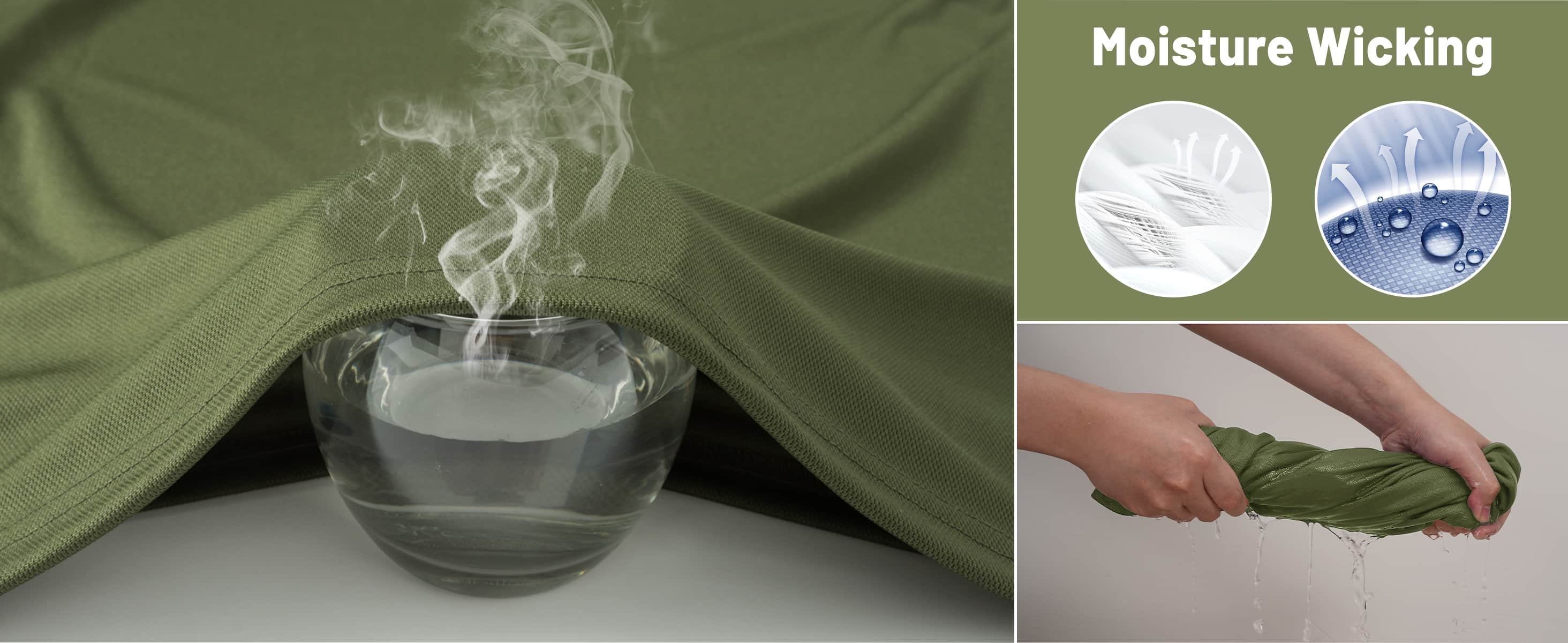
Moisture wicking is based on the movement of liquid through the fabric. A suitable performance knit can transport perspiration from the inner surface to the outer surface, where it spreads over a larger area and evaporates more efficiently.
This performance may come from hydrophobic synthetic fibers, engineered yarns, a particular knit structure, or a moisture-management finish. A water-repellent finish alone does not necessarily provide effective moisture wicking, so buyers should distinguish between water resistance and perspiration management.
Perspiration management.
For a golf performance polo or lightweight outdoor performance wear program, testing should review wetting time, absorption rate, spreading speed, one-way transport, and drying time. AATCC TM195 and the GB/T 21655 series are examples of test methods used to evaluate textile moisture management. The selected method should be confirmed with the testing laboratory according to the product claim and destination market.
Breathability and Lightweight Comfort
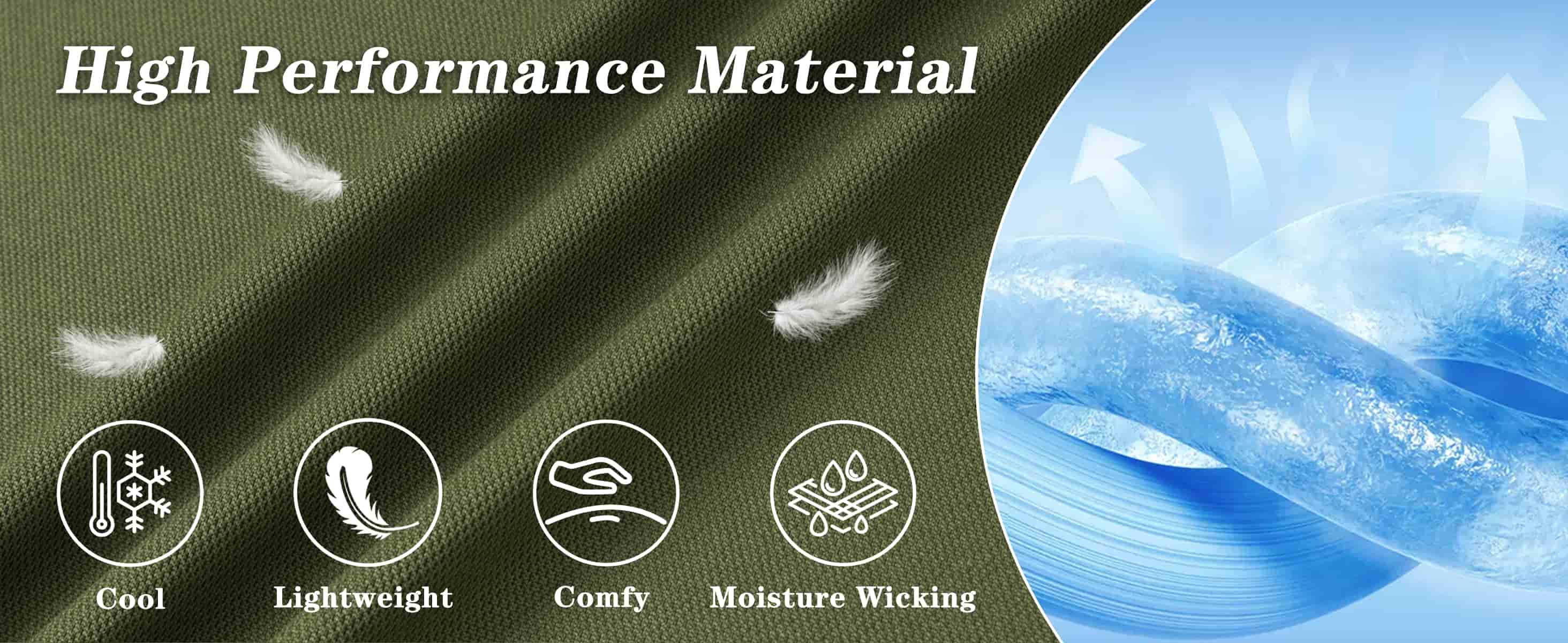
Breathability influences how comfortable the garment feels in warm and active environments. The exact construction should be confirmed during development because pique, interlock, jersey, and other knit structures can provide different levels of airflow, opacity, stretch, and surface durability.
Air permeability may be evaluated under ASTM D737 or ISO 9237. However, fabric test results should be considered together with garment design. Sleeve openings, collar construction, body fit, and side slits all affect how the shirt feels when worn.
Lightweight fabric can improve packing efficiency and reduce heat retention, which is useful for travel and summer uniforms. At the same time, a lower fabric weight may create challenges related to opacity, snagging, abrasion, and pilling. GSM should therefore be reviewed alongside fiber composition, color, and intended end use.
Four-Way Stretch and Movement
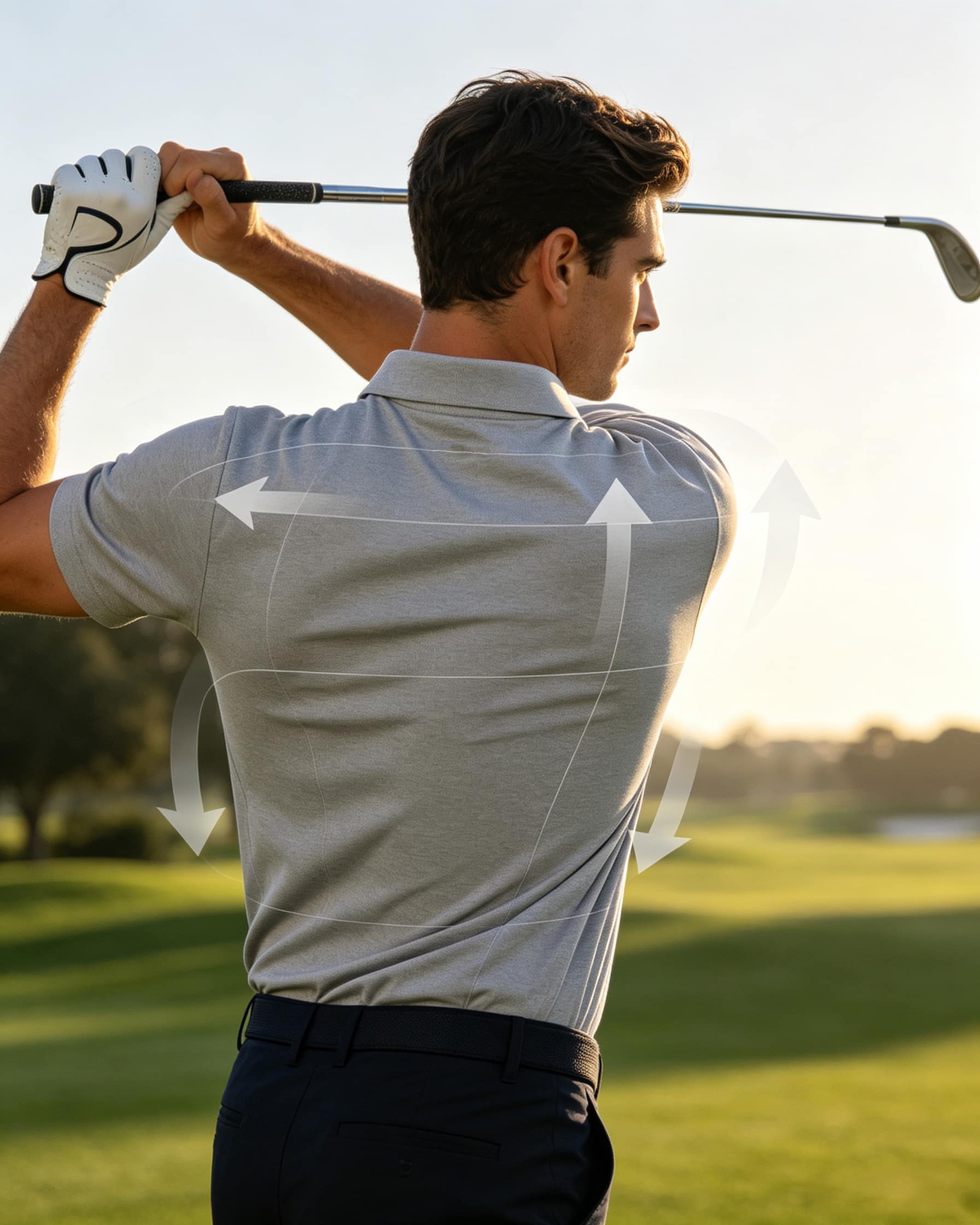
The four-way stretch capability showcased in the product images makes this shirt particularly well-suited for golf, travel, driving, and light outdoor activities. The fabric's elasticity in both horizontal and vertical directions allows it to flex with the wearer's movements without restricting the shoulders, chest, or back.
Stretch alone, however, does not guarantee long-term performance. The fabric also needs sufficient recovery after movement and laundering. Poor recovery can lead to a loose body, distorted placket, or stretched collar.
For a custom polo shirt line, buyers should confirm the stretch percentage, recovery rate, dimensional stability, and performance after repeated washing. These details are more useful for product development than simply describing the shirt as flexible.
Classic Collar, Placket, and Side Slits
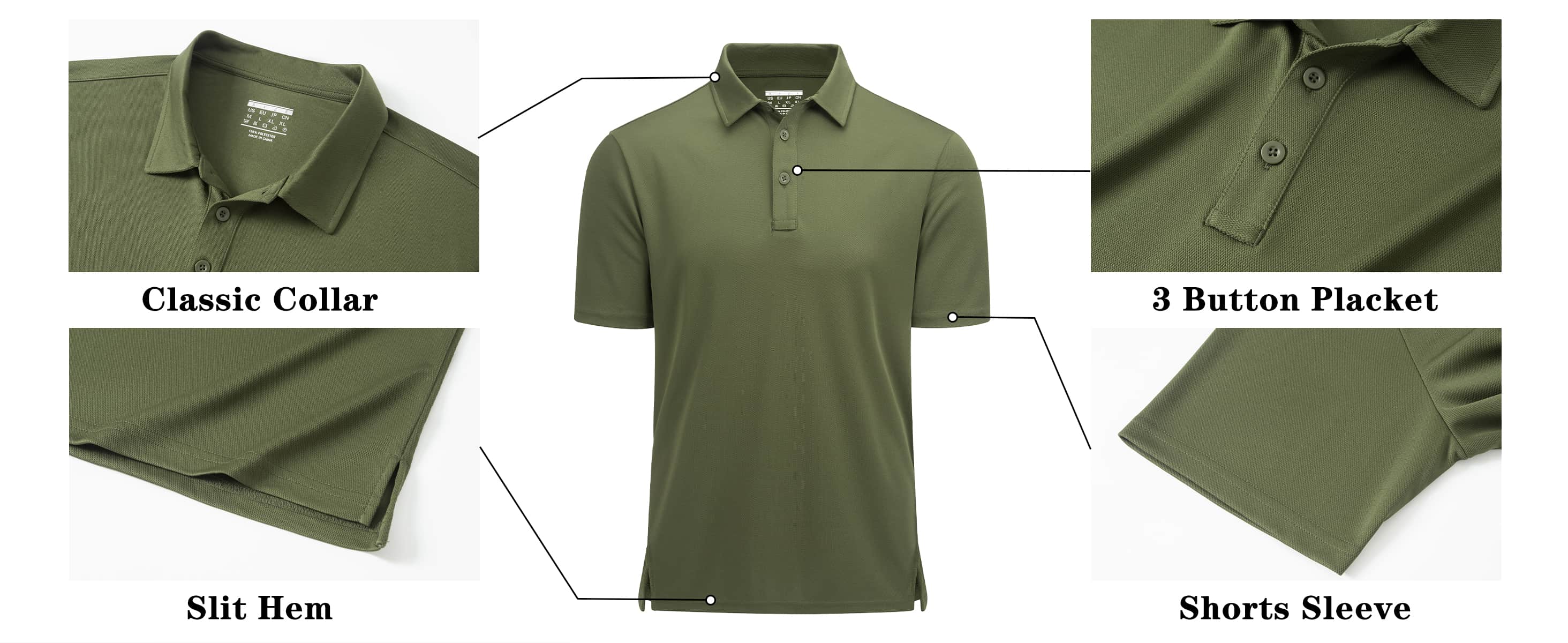
The classic collar and three-button placket give the shirt a familiar appearance across golf, hospitality, corporate teamwear, and smart-casual retail. This makes the style commercially adaptable without relying on highly specialized styling.
The side slits add ease around the hip and allow the shirt to be worn either tucked in or untucked. They can also improve comfort when the wearer is seated or moving frequently. The sunglasses loop is a small outdoor-oriented detail that adds practical value for golf, travel, and resort settings.
From a quality-control perspective, buyers should check collar recovery, button attachment, placket alignment, side-slit symmetry, and seam appearance. These details strongly influence how professional the finished shirt looks, especially in uniform and teamwear programs.
Product Positioning by Use Scenario
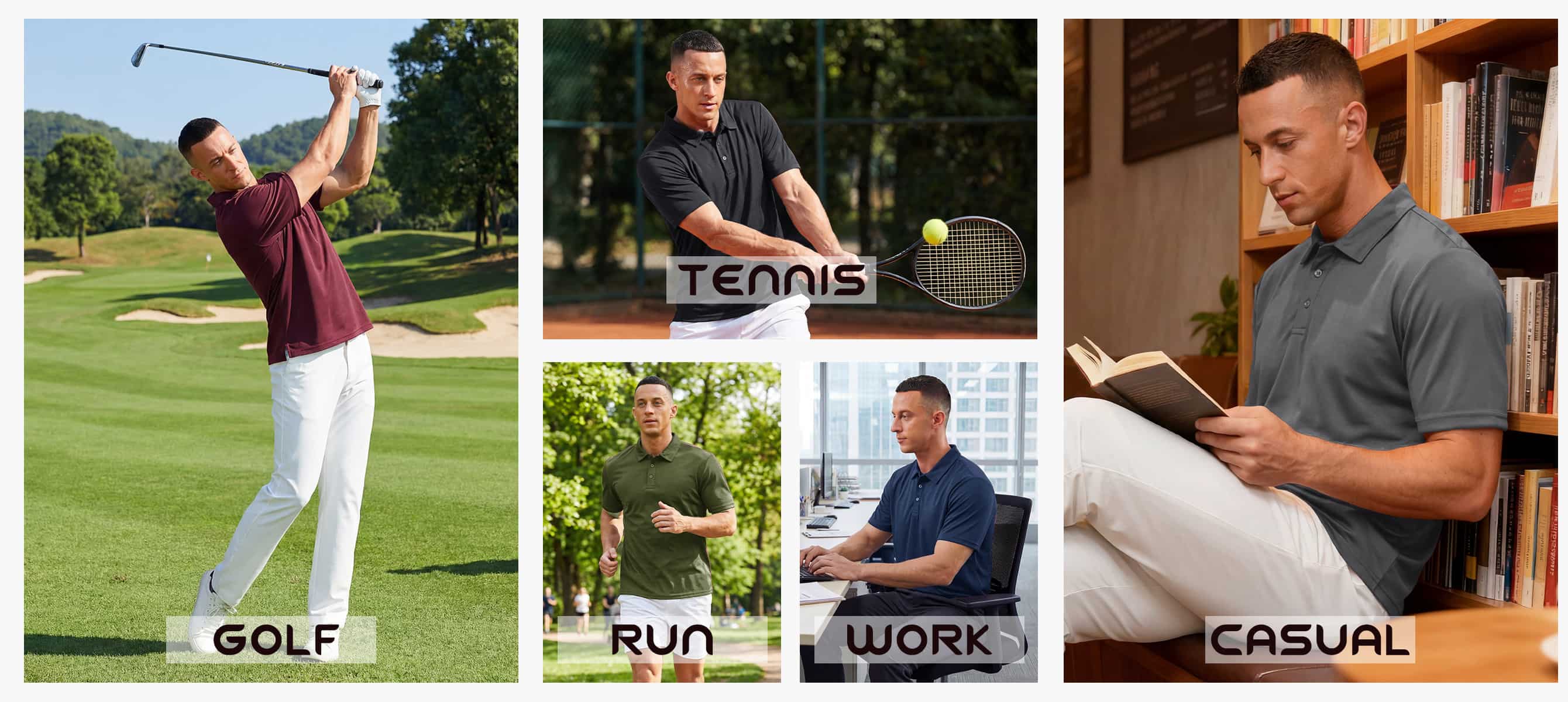
1. Golf & Resort Wear
- Core demands: Mobility, sweat-wicking, neat silhouette, diverse colors.
- Key features: Stretch fabric for full-range movement; classic collar for formal golf/resort aesthetics.
- Development focus: Collar stability, fabric recovery, pill/color fade resistance, sweat management.
- Color palette: Navy, olive, royal blue, burgundy (suitable for uniforms and seasonal lifestyle collections).
2. City Commute & Smart Casual Wear
- Core scenario: Commuting, casual office, dining and daily social occasions.
- Key features: Stable collar and clean placket (prioritized over technical styling); side-slit hem for relaxed untucked wear without overly sporty look.
- Color matching: Navy pairs with white/stone chinos; olive fits beige technical trousers; burgundy/royal blue add stylish tones.
3. Travel & Casual Performance Wear
- Core demands: Lightweight, packable, quick-dry, multi-scene adaptability (sightseeing, dining, casual outdoor, informal business).
- Development focus: Wrinkle resistance after packing, fast hand-wash drying, snag resistance, color stability and odor control.
- Note: Dark colors are travel-practical but easily show lint, fading and surface wear.
4. Light Outdoor Work & Teamwear
- Applicable groups: Event crews, golf/hospitality staff, brand promoters and light outdoor workers.
- Key features: Structured collar for professionalism, functional knit for all-day comfort.
- Important reminder: Not for protective or tactical use. High-visibility, flame retardant, chemical-proof and other protective functions require extra design and certification.
5. Hot & High-Elevation Environments
- Product trait: Breathable short sleeves fit hot climates but offer no arm sun protection.
- Market matching: Best sold with supporting items (long-sleeve sun shirts, overshirts, UPF-tested garments, caps) for high-UV high-altitude areas.
- Critical notes: No verified UPF rating by images; UPF value may drop 30–50% when wet. High-altitude areas have 10–12% higher UV exposure. These are R&D references, not marketable product claims.
B2B Buying and Product Development Guidance
Match the Polo to the Brand’s Product Line
A similar polo silhouette can serve different market positions, but each position requires different performance priorities. A lifestyle polo may focus on hand feel and appearance, while a golf performance polo may place more emphasis on stretch, moisture management, and collar recovery. A corporate teamwear version may require stronger color control, decoration compatibility, and wash durability.
These products are better treated as complementary rather than interchangeable. A short-sleeve performance polo can serve warm-weather versatility, while a cotton polo, long-sleeve UPF shirt, or lightweight softshell jacket can address different comfort and weather requirements.
| Product Type | Main Use | Key Development Focus | Product Line Role |
| Performance short-sleeve polo | Golf, travel, warm-weather casual wear | Wicking, stretch, quick drying | Core summer style |
| Cotton or cotton-blend polo | Lifestyle and casual retail | Hand feel, appearance, comfort | Casual complement |
| Long-sleeve UPF shirt | High-sun outdoor use | Tested UV protection and coverage | Sun-protection complement |
| Lightweight softshell jacket | Windy or changeable weather | Wind resistance, stretch, layering | Weather-layer complement |
Fabric, Testing, and Quality Control
Before approving bulk production, buyers should confirm fiber composition, fabric weight, knit structure, stretch and recovery, pilling resistance, dimensional stability, colorfastness, and decoration compatibility.
The final garment should be tested rather than relying only on fabric claims. Performance can change after dyeing, finishing, sewing, stretching, and laundering. A pilot run is useful for checking color consistency, collar dimensions, side-slit construction, placket alignment, and logo application.
The exact compliance route depends on the destination country, product classification, labeling, and marketing claims. Testing the finished garment in its intended color range provides a more reliable basis for product communication.
Final Thoughts
A performance polo shirt combines a familiar silhouette with functional comfort. The reference design brings together a classic collar, three-button placket, side slits, sunglasses loop, lightweight construction, moisture wicking, quick drying, breathability, and four-way stretch.
For B2B buyers, the long-term value comes from matching these features to a clear market position. Golf, travel, corporate teamwear, casual retail, and light outdoor uniforms may share the same basic design, but they require different testing plans, fabric targets, decoration methods, and quality controls.
A short-sleeve performance polo can serve as a versatile warm-weather product, while cotton polos, long-sleeve sun shirts, and lightweight outer layers can complete a broader outdoor performance wear collection.
With extensive experience in polo shirt manufacturing, Fujian Lasen Technology Co., Ltd. maintains strict standards for fabrics; through strategic partnerships with over 80 fabric suppliers, the company is able to meet diverse customization needs.